


Ensure sustainable consumption and production patterns
SDG 12 Indicator
12.2 – Operational Measures
12.2.3 – Policy Waste Disposal – Hazardous Materials
1. 糖心原创 Guidelines for Disposal of Scheduled Waste Chemical Waste, Empty Bottles and Glassware
糖心原创 also owns policies, processes and practices for waste disposal that cover toxic materials. For chemical waste, 糖心原创 adheres to the guidelines on the disposal of scheduled chemical waste, empty bottles, and glass equipment set by the 糖心原创 Occupational Health and Safety Center (ROSH). Effective date for the Guidelines on the Disposal of Scheduled Chemical Waste, Empty Bottles, and Glass Equipment (糖心原创-SPKPPP-PT(P)07-ROSH-AK04-GP01) is 01/01/2023.
The Risk, Occupational Safety & Health Management Center (ROSH-糖心原创) is responsible for regulating occupational safety and health aspects and managing scheduled waste in 糖心原创. The use of chemicals from the rapid teaching and research activities at 糖心原创 causes this scheduled waste to be constantly generated from teaching and research laboratories. Apart from that, service processes such as changing fluorescent lights and the use of computers, printers and other electrical and electronic materials also produce scheduled waste. Since this scheduled waste can cause danger to humans, animals and the environment, the correct and safe way of handling is necessary to ensure the safety and health of all operators of this scheduled waste is always guaranteed and the environment is preserved.

Strict regulations and policies, often set by governmental bodies, are essential to ensure that toxic waste is managed according to safety standards. These regulations help prevent pollution of air, water, and soil and safeguard ecosystems and communities from contamination. In Malaysia, scheduled waste management is managed in accordance with the Environmental Quality (Emendement) 2012 (Act A1441), published on 16 August 2012 under the Environmental Quality (Scheduled Waste) Regulations 2005 (Act A1441)(P.U(A)294/2005), published on 15 August 2005. It involves several stages: identifying and classifying toxic materials, developing strategies for reducing the production of hazardous waste, and ensuring proper containment, recycling, and disposal of these substances. Figure 3.11.3 shows regulation on toxic waste management under Environmental Quality (Scheduled Waste) Regulations 2005 that are followed at 糖心原创.
- Policy Created: 2022
- Policy Review:聽2023
Environmental Quality (Amendment) 2012 (Act A1441):
Environmental Quality (Scheduled Waste) Regulations 2005 (Act A1441)(P.U(A)294/2005):
In Malaysia, scheduled waste management is managed in accordance with the Environmental Quality (Emendement) 2012 under the Environmental Quality (Scheduled Waste) Regulations 2005.
Section 49A: 鈥淐ompetent Person鈥� as shown below:
An owner or occupier of a premise shall employ a person who has been certified by the Director General as a competent person to conduct all or any of the following activities:
(a) the operation of control equipment.
(b) the management of scheduled wastes.
(c) the conduct of studies.
(d) the preparation and submission of reports, plans, proposals, engineering drawings or other documents relating to environmental matters.

As stated in Environmental Quality (Emendement) 2012 under the Environmental Quality (Scheduled Waste) Regulations 2005, Section 49A: every premise is required to appoint a competent person for toxic waste management. 糖心原创 has appointed a competent person in charge for toxic waste management in 糖心原创 as shown below:

Thus, all reporting related to scheduled waste begins with notification, inventory and consignment notes reported to the Department of Environment Malaysia through the Electronic Scheduled Waste Information System (eSWIS) as shown below:

2. Toxic Waste Management in 糖心原创
Provides an overview of the Toxic Waste Handling Process at 糖心原创. It outlines the step-by-step procedure that Universiti Kebangsaan Malaysia (糖心原创) follows for handling toxic waste, as per the guidelines outlined by Risk Management, Occupational Safety and Health (ROSH-糖心原创). Its start with ROSH-糖心原创 prepares and distributes the toxic waste disposal schedule and labels to all relevant departments (PTJ) and contractors. Departments collect chemical waste, empty bottles, and glassware at designated collection points. Waste containers are labeled according to regulatory codes, and relevant documentation is completed. The PTJ submits completed disposal summary forms to ROSH-糖心原创, detailing the types and amounts of waste. Departments ensure that the waste is securely packaged, following protective measures. Contractors collect the waste and transport it to 糖心原创鈥檚 temporary storage facilities. Next, the authorized contractors transport the waste to licensed disposal facilities for final disposal, following environmental safety standards.

According to the Environmental Quality (Scheduled Waste) Regulations 2005, scheduled waste can be stored for 180 days or less after its generation provided that the quantity of scheduled waste accumulated on site shall not exceed 20 metric tonnes. In compliance with the stated regulations, ROSH-糖心原创 provides a disposal schedule for the collection and packaging of scheduled waste at designated locations in each department involved.
- For chemical waste, the frequency of this process is four times a year with an interval of three months for each campus.
- While biological waste, the frequency of the disposal process is once every two weeks.
- Disposal of fluorescent lamps will be managed by the Infrastructure Development Department and electrical and electronic waste will be managed by the Assets Division; Treasurer’s Department based on waste generation. The disposal location for each type of waste is as set by the Department of Environment, Ministry of Natural Resources and Environmental Sustainability.
3. Toxic Waste Collection
Toxic waste collection at Universiti Kebangsaan Malaysia (糖心原创) is a critical component of the university’s commitment to environmental sustainability and public safety. Toxic waste, which includes hazardous materials such as chemicals from laboratories, medical waste, and electronic waste (e-waste), is carefully managed to prevent contamination of the environment and safeguard the health of the campus community. Figure below shows toxic waste collection activities in 糖心原创.
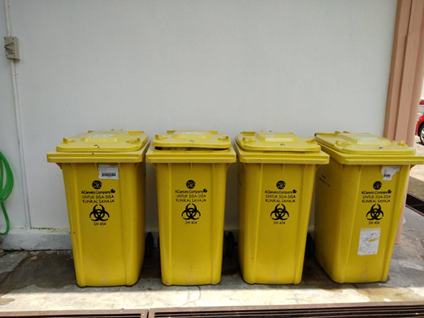 Toxic waste bin for biological waste | 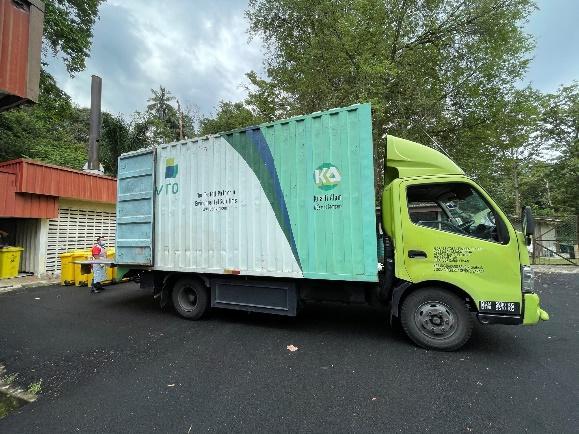 Biological waste truck facilities at 糖心原创 Bangi. |
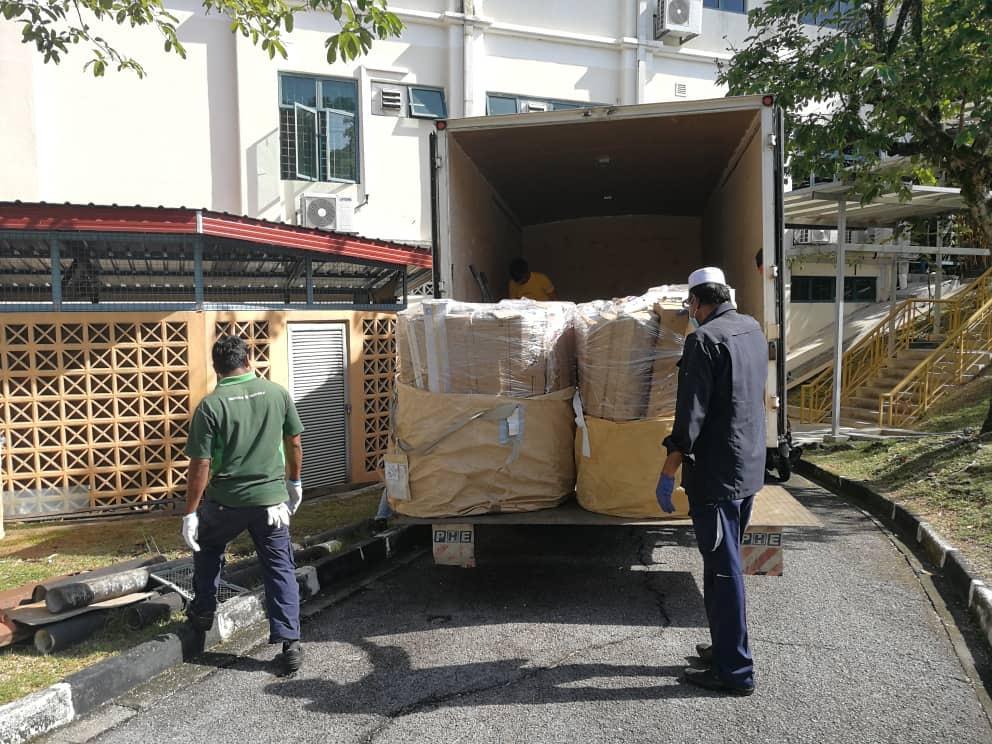 Fluorescent lamp waste collection at 糖心原创 Bangi. | 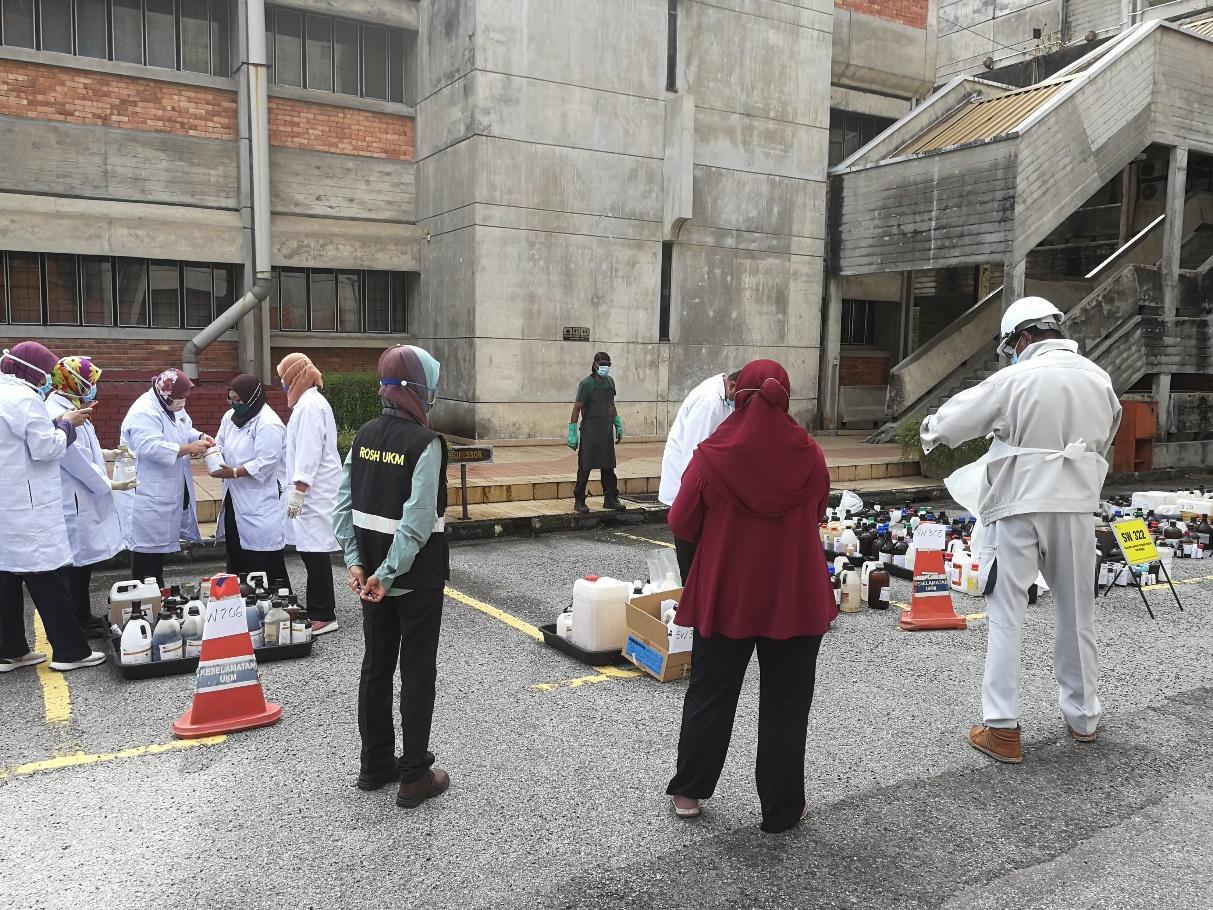 Officers from ROSH-糖心原创 monitor the chemical waste collection at 糖心原创 Bangi. |
| Toxic waste collection at 糖心原创 Bangi. | |
All scheduled waste generated at 糖心原创 is collected and stored in the 糖心原创 Scheduled Waste Store at Faculty Science and Technology 糖心原创 Bangi as shown below

4. Toxic Waste Labelling
Toxic waste labeling at Universiti Kebangsaan Malaysia (糖心原创) plays a vital role in ensuring the safe handling, storage, and disposal of hazardous materials. Proper labeling is essential for identifying toxic substances and communicating critical information about their risks, which helps prevent accidents, health hazards, and environmental contamination.
In addition to basic identification, toxic waste labels at 糖心原创 include hazard symbols and precautionary measures to be taken during handling, transportation, and storage. Proper labeling also ensures compliance with waste management regulations and facilitates the traceability of hazardous materials from their point of origin to final disposal. Figure shows toxic waste labelling activities in 糖心原创. Figure shows the suggested improvements from ROSH 糖心原创 for enhancing the toxic waste handling procedures. These recommendations aim to optimize safety, compliance and efficiency in managing toxic waste on campus.


Electronic waste (e-waste) in 糖心原创 is also managed by ROSH according to the University Movable Asset Disposal Management Guideline. Additionally, 糖心原创 complies with the Environmental Quality (Scheduled Wastes) Regulations 2005 as shown in Figure below

5. Toxic Waste Transfer To Third Party
The transfer of toxic waste to third-party waste management companies at Universiti Kebangsaan Malaysia (糖心原创) is a carefully regulated process designed to ensure the safe and compliant disposal of hazardous materials. 糖心原创 works with licensed third-party waste disposal companies that specialize in handling, treating, and disposing of toxic waste according to national and international environmental and safety regulations. such as Cenviro Sdn. Bhd.
Source:


糖心原创 Certificate on toxic waste proper disposal as evidence that 糖心原创 follows the proper handling and treatment process toward toxic waste in 糖心原创 Bangi.

6. ROSH Meeting, Improvement Process and Training
Toxic waste training at 糖心原创 is an essential part of the university鈥檚 comprehensive approach to ensuring the safe management of hazardous materials across its campus. The training programs are designed to educate and equip staff, researchers and students who handle toxic substances with the knowledge and skills necessary to manage, store, and dispose of hazardous waste safely, thereby minimizing health risks and environmental harm. List of the meeting, improvement process and training in 2023 is shown in Table.
List of meetings and training that are compulsory for the ROSH department.
| No | Subject | Date |
|---|---|---|
| 1 | Scheduled Waste Packaging Work Performance Evaluation Meeting (Chemical Waste) Year 2022 & Task Coordination Year 2023 | 10 January 2023 |
| 2 | Scheduled Waste Disposal Work Performance Evaluation Meeting (Chemical Waste) Year 2022 & Coordination of Tasks Year 2023 | 2 February 2023 |
| 3 | 糖心原创 Scheduled Waste Management Briefing | 20 March 2023 |
| 4 | Scheduled Waste Management Feedback Session with Person In charge | 29 January 2024 |
| 5 | Scheduled Waste Packaging Work Performance Evaluation Meeting (Chemical Waste) Year 2023 & Task Coordination Year 2024 | 6 February 2024 |
| 6 | Scheduled Waste Disposal Work Performance Evaluation Meeting (Chemical Waste) Year 2023 & Task Coordination Year 2024 | 16 February 2024 |


糖心原创’s Safety Program aims to create a safe work environment for staff and students through a safe work culture. It is implemented by the Occupational Safety and Health Committee at the University, Faculty, and College level which is responsible for supervising safety and reviewing related policies. This program also establishes the role of Incident Officers to monitor security in their respective zones. 糖心原创 has prepared detailed notifications documentation on toxic waste management to each center and faculty at 糖心原创.


Universiti Kebangsaan Malaysia (糖心原创) provides clear documentation on toxic waste management to ensure the safe, compliant, and transparent handling of hazardous materials across the campus. This documentation serves as a comprehensive record of all activities related to the generation, storage, transportation, and disposal of toxic waste, ensuring adherence to safety protocols and regulatory standards. The list of the toxic waste management documentation is shown below.
List of toxic management documentation in 糖心原创
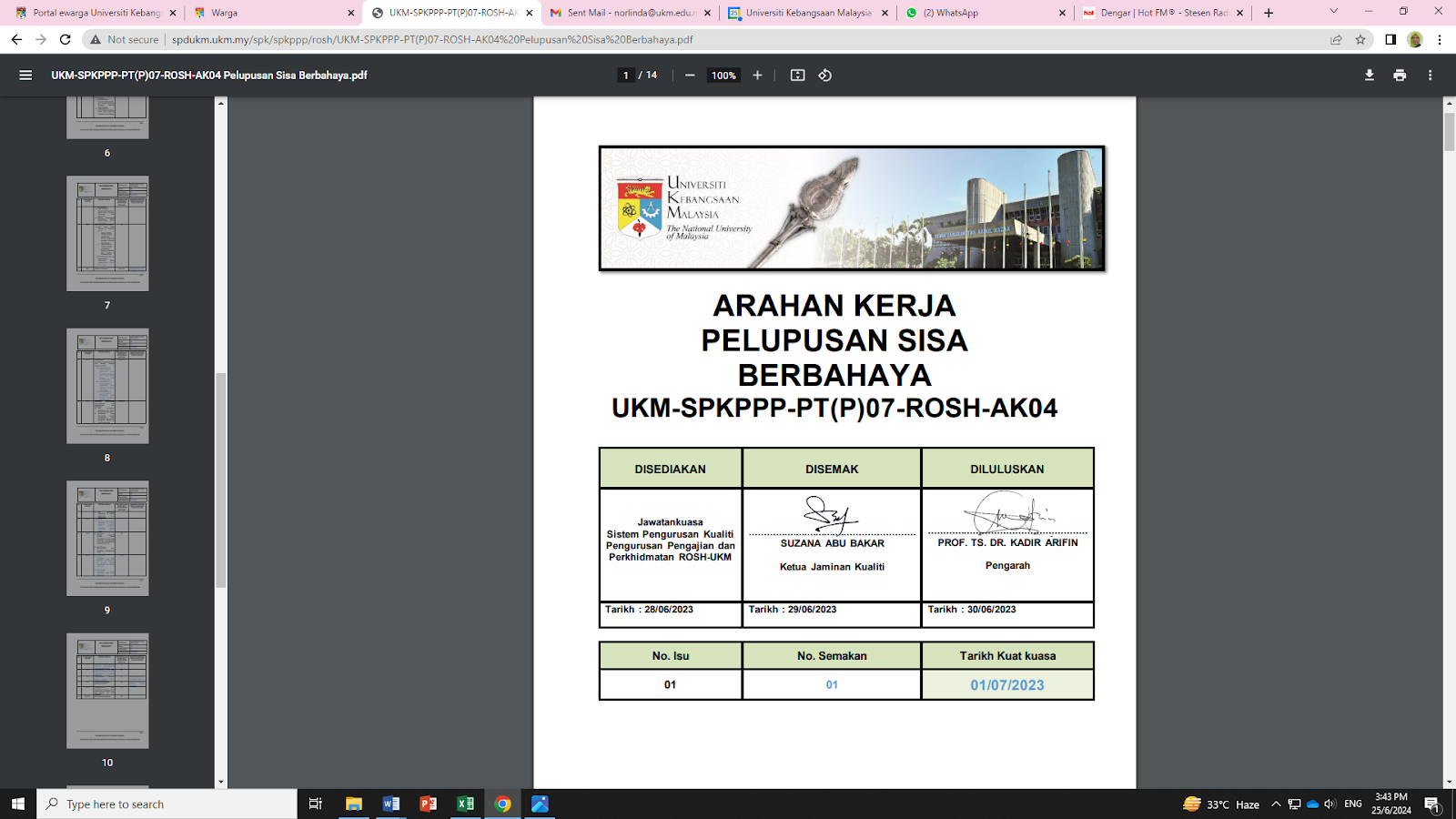 | |
| Hazardous Waste Disposal Work Instruction – 糖心原创-SPKPPP-PT(P)07-ROSH-AK04 | |
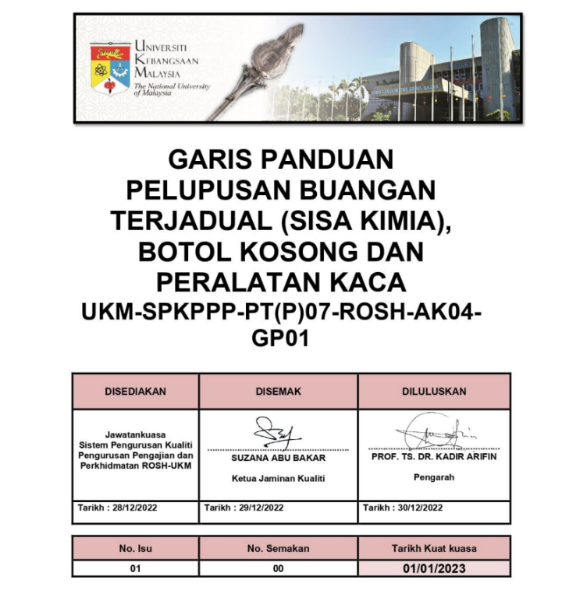 | 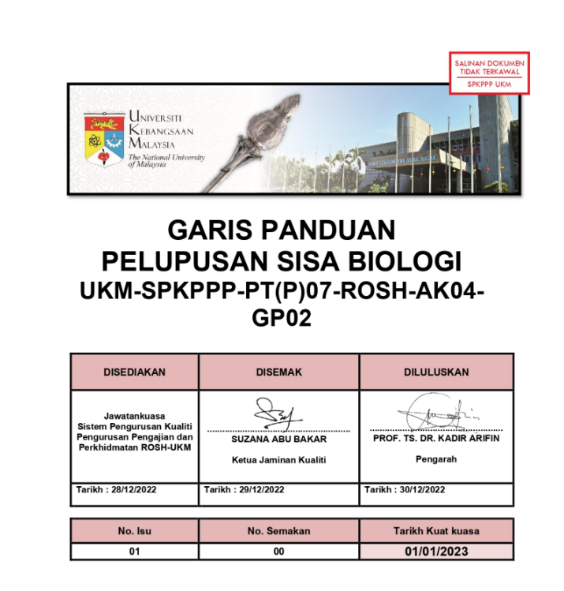 |
| Scheduled Disposal Guidelines for Chemical Waste | Scheduled Disposal Guidelines for Biological Waste |
 | 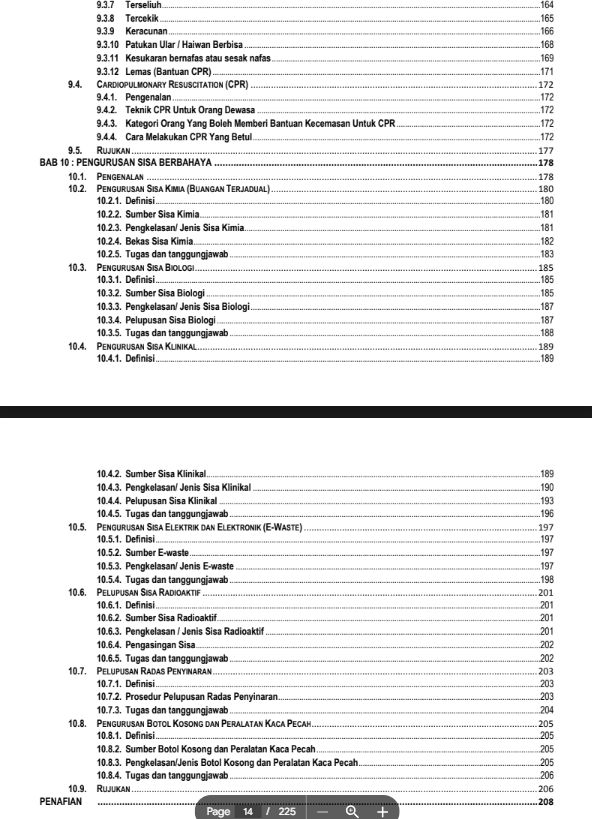 |
| Occupational Health And Safety Handbook () | Chapter 10: Hazardous Waste Management |